Bali is best enjoyed on two wheels. But make sure you know how to ride safely in Bali.
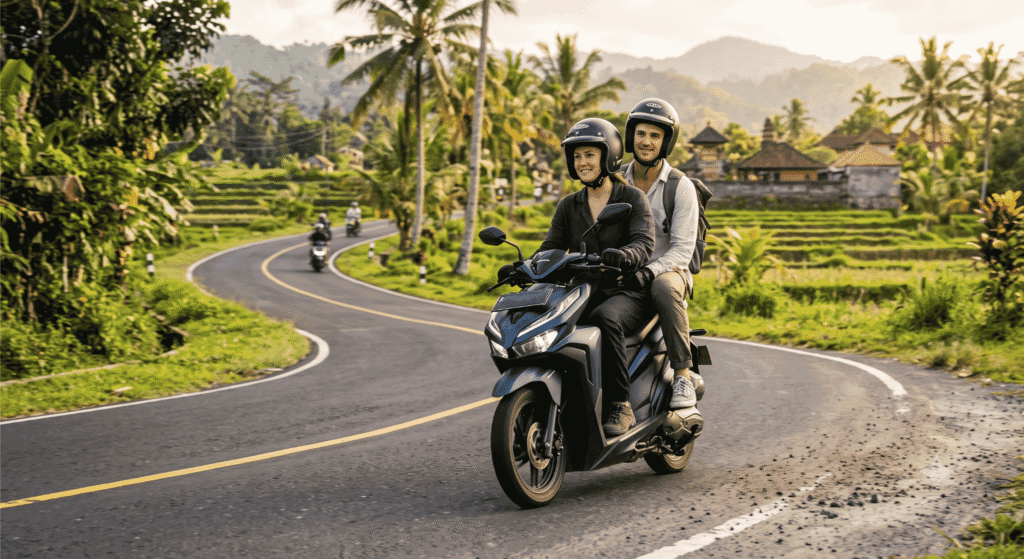
Riding a motorbike or automatic scooter (matic) is practically a rite of passage when exploring Bali. It gives you the freedom to skip past long traffic jams in Canggu or wind through the scenic ridges of Kintamani.
However, Bali’s roads are unique, and what works on an empty highway back home won’t keep you upright here. To keep your trip memorable for the right reasons, here is the definitive guide to safe riding on the Island of the Gods.
1. The Vehicle Factor: Don’t Just Rent and Go
When you rent a scooter, the rental provider will usually give you a quick walkthrough, but your safety checklist starts before you turn the key. Do not accept a bike without inspecting these three things:
- The Brakes: Pull both brake levers. They shouldn’t feel spongy or press all the way down to the handlebars. If you have to squeeze with maximum effort just to slow down, ask for another bike.
- Tire Tread: Many rental scooters have smooth, worn-down tires. In Bali’s sudden downpours, bald tires guarantee a slide. Look for deep grooves that can clear water and grip the asphalt.
- Lights and Mirrors: Ensure the headlights, brake lights, and turn signals work perfectly. You will need your mirrors constantly to track the sea of scooters moving around you.
2. Accessories & Protective Gear: Beyond the Aesthetic
It’s tempting to ride in a swimsuit and flip-flops, but the local term “Bali Kiss” (asphalt rash from a scooter accident) is something you want to avoid.
The Helmet Protocol
Never wear the flimsy, lightweight plastic “shell” helmets often thrown in for free.
- The Best Practice: Ask your rental shop for a properly fitted, SNI-certified (Indonesian National Standard) helmet with a clear visor.
- The Visor: A visor is crucial. Bali roads are filled with kicking dust, gravel, and large insects. Taking a beetle to the eye at 40 km/h will cause an instinctive twist of the handlebars.
- The Strap: Always click the chin strap tight. An unstrapped helmet flies off the moment your bike wobbles, offering zero protection when you actually hit the ground.
Smart Attire
- Shoes over Sandals: If you have to put your foot down suddenly to balance, flip-flops will snap, exposing your feet to moving wheels or hot exhaust pipes. Wear closed-toe shoes.
- Ditch the Sling Bag: Never ride with a bag slung loosely over one shoulder. It unbalances your center of gravity and can be a target for opportunistic bag-snatchers. Secure it in the under-seat compartment (bagasi) or keep it flat on your back.
3. Road Conditions & The Golden Rule of Braking
Bali’s traffic moves like a school of fish—synchronized, chaotic, but flowing. To survive it, you have to master your machine’s dynamics, especially on tricky terrain.
The Physics of Braking on a “Matic”
Most rental bikes in Bali are automatic scooters (like the Honda Vario, Yamaha Scoopy, or NMAX). On a matic, your left lever controls the rear brake and your right lever controls the front brake.
Critical Rule: Always apply both brakes simultaneously with a smooth, progressive squeeze.
The dangerous mistake many beginners make is panic-braking with only one side—specifically the right hand (front brake) or left hand (rear brake)—especially on sandy, gravelly, or wet roads.
- The Sandy Road Trap: Coastal roads (like Uluwatu or Nusa Penida) and construction zones often have patches of fine sand or loose gravel.
- If you hit only the front brake (right hand) on sand, the front wheel locks up instantly. Because the front wheel steers the bike, locking it causes the handlebars to snap sideways, and you will wash out before you can react.
- If you hit only the rear brake (left hand) at speed, the rear tire loses traction and fish-tails, easily causing a “low-side” crash where the bike slides out from under you.
The Solution: When approaching sand, gravel, or wet asphalt, slow down well in advance. Keep the bike completely upright (do not lean or turn), ease off the throttle, and apply light, even pressure to both levers together, favoring the rear brake slightly more than usual to keep the front steering wheel free to track smoothly.
Navigating Local Traffic Culture
- Drive on the Left: Indonesia drives on the left side of the road.
- The Polite Honk: In western countries, honking is aggressive. In Bali, a short beep-beep is defensive. Use it when passing a truck, blind corners, or entering narrow alleyways (gangs) to let others know you’re there.
- Watch the Shoulders: Give parked cars, dogs, and pedestrians plenty of space. A parked car door can swing open at any moment, or a street dog (anjing) might suddenly dart across the road.
Stay calm, blend with the flow of local riders, and never speed. Selamat jalan—have a safe ride!